

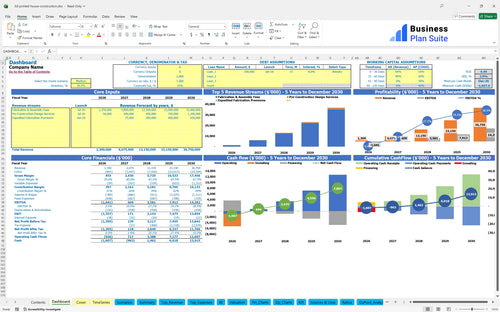
All-in-one Dashboard
Core inputs and core outputs


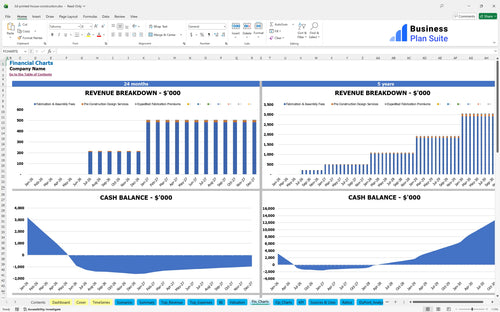
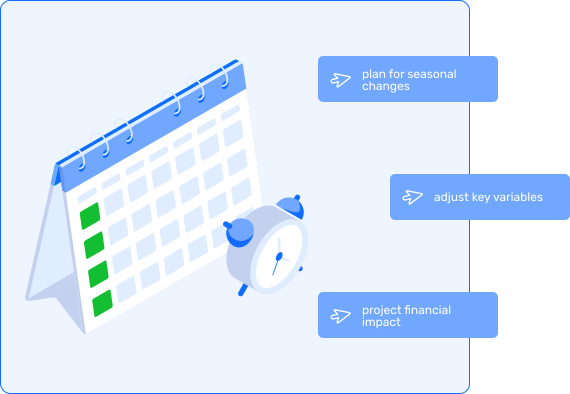
Construction activity often varies by season, and your rapid housing development plan needs to account for that. This model allows you to simulate revenue fluctuations and adjust your financial forecasts accordingly, ensuring you can manage cash flow effectively during both peak and off-peak months.
Core inputs and core outputs
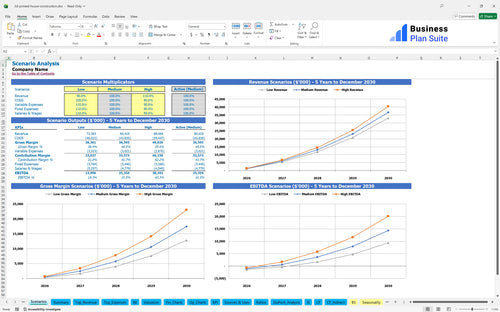
Three scenario analysis
Presentation ready
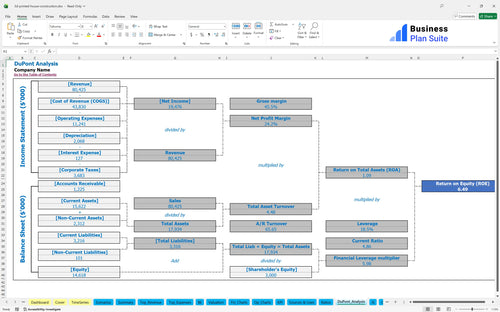
DuPont analysis
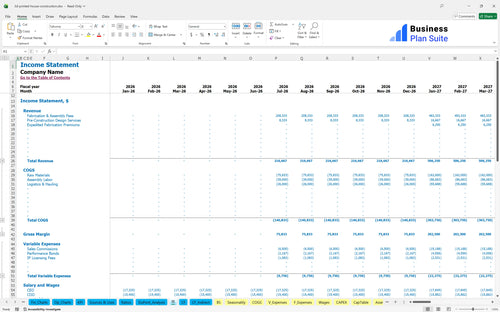
Researched revenue assumptions
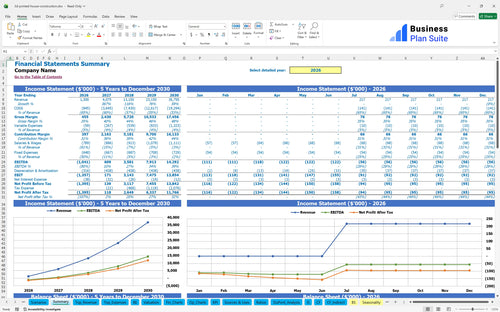
Lender-friendly financial outputs
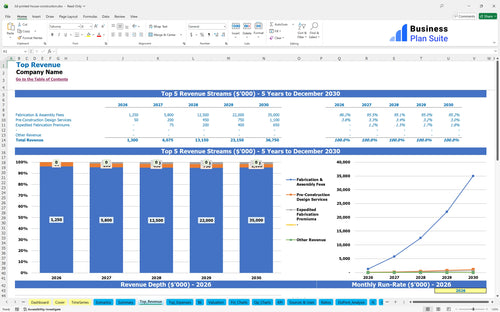
Revenue stream detailed view
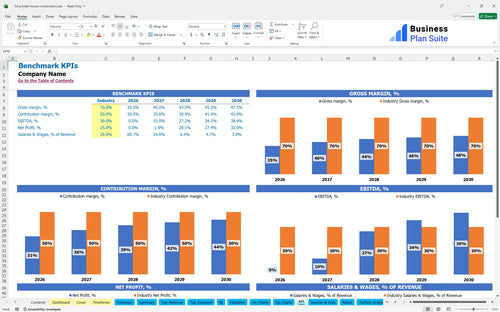
Performance metrics benchmark
We built this financial model based on a deep dive into the 3D printed house construction market. Key assumptions for revenue streams-like building 12 standard homes at a $250,000 average price point and 6 custom designs at $400,000 annually-are already plugged in. We've also pre-populated operating expenses, staffing, and capital investments like a $750,000 3D construction printer, and it's all fully editable to match your specific automated construction business model.
Your business plan for 3D concrete printing services shows a net loss of $128,750 in the first year, which is common given the high initial investment. However, you're projected to reach profitability in Year 2 and generate a net profit of $878,460 by Year 3 as you scale operations.
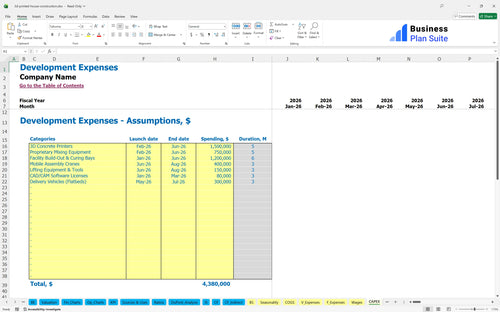
To launch your 3D construction printing startup, you'll need approximately $1.13 million in initial capital. This covers the essential equipment and setup costs required to get your first projects off the ground and begin your rapid housing development plan.
Investment in 3D printed housing construction shows strong potential returns. Investors can expect an Internal Rate of Return (IRR) of 35% and a 3.2x return on their initial investment. The payback period is projected to be just 3.5 years, making it an atractive proposition.
This ready-to-use financial model comes pre-filled with industry-specific formulas and assumptions for a 3D printed house construction business. It's designed to be easily tailored to your specific additive manufacturing construction business concept, letting you focus on strategy instead of spreadsheet setup.
A solid 3D printed house business plan requires long-term vision. This model provides detailed 5-year projections for revenue, costs, and profits, giving you a clear roadmap for growth and helping you anticipate financial needs for your concrete 3D printing business.
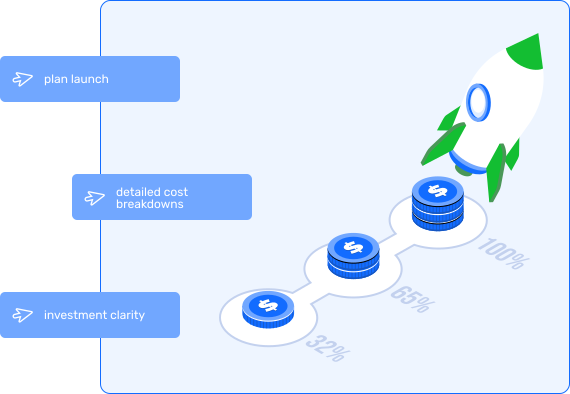
Understanding your financial needs from day one is critical. The template provides a detailed cost breakdown for launching and operating a 3D printed home construction business, covering everything from heavy machinery to software subscriptions, so you know exactly what it takes to get started.
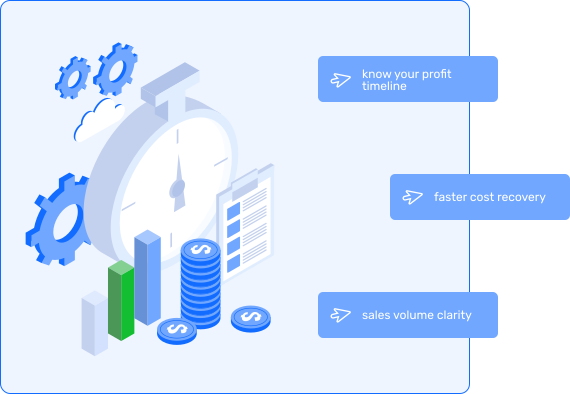
Knowing when you'll become profitable is a key milestone. This model automatically calculates your break-even point in both units sold and total revenue, helping you set realistic sales targets and manage your operational plan for automated construction printing effectively.
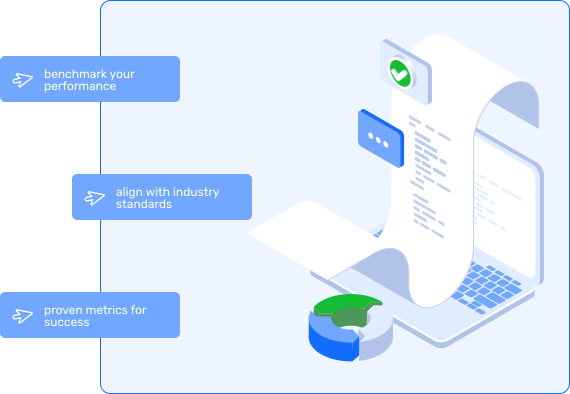
How does your plan stack up? The model incorporates key performance indicators and benchmarks specific to the automated construction business model. You can compare your projected material costs, labor expenses, and profit margins against industry standards to identify areas for improvement.
Work where you're most comfortable. This financial model template is fully compatible with both Microsoft Excel (for Windows and Mac) and Google Sheets, offering you the flexibility to work offline or collaborate with your team in the cloud.

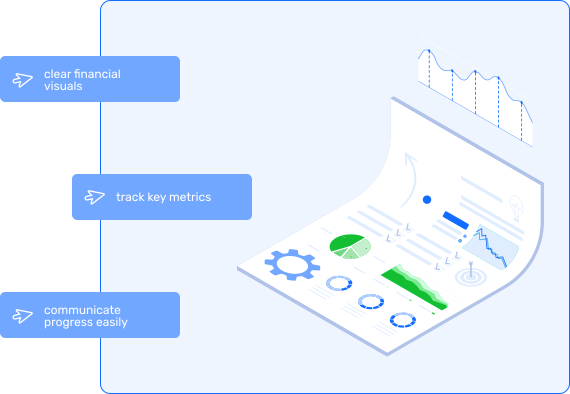
Complex data becomes clear with visual summaries. The model includes an intuitive dashboard that visualizes your revenue streams, expense categories, and overall profitability, making it easy to track performance and present your 3D printed house construction market analysis to stakeholders.
Construction activity often varies by season, and your rapid housing development plan needs to account for that. This model allows you to simulate revenue fluctuations and adjust your financial forecasts accordingly, ensuring you can manage cash flow effectively during both peak and off-peak months.
When you're funding a 3D concrete construction startup, a professional presentation is non-negotiable. The model generates clean, polished reports and summaries that are perfect for your pitch deck, helping you clearly communicate your financial projections to investors, banks, or partners.


Simply purchase and download the financial model template, then access it instantly using Microsoft Excel or Google Sheets. No installation or technical expertise required-just open and start working.

Enter your business-specific numbers, including revenue projections, costs, and investment details. The pre-built formulas will automatically calculate financial insights, saving you time and effort.

Leverage the investor-ready format to confidently showcase your financial projections to banks, franchise representatives, or investors. Impress stakeholders with clear, data-driven insights and professional reports.

Leverage the investor-ready format to confidently present your projections to banks, franchise representatives, or investors.
Typical structural shell delivery is rapid and predictable, addressing time-consuming from-scratch planning the template's "High-Level Financial Forecasts" and timeline guidance let you present guaranteed shell completion claims (for example, revenue and EBITDA milestones) clearly to investors and lenders, saving hours compared with hiring a consultant and reducing credibility gaps.