

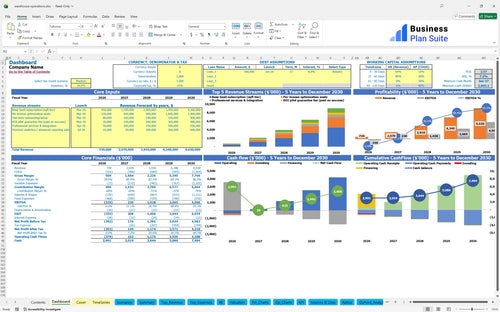
All-in-one Dashboard
Core inputs and core outputs


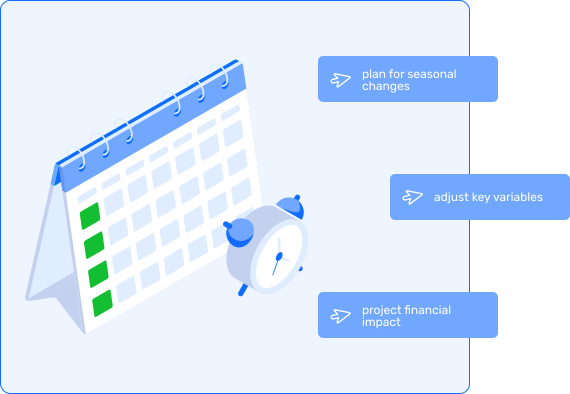
Warehouse demand can fluctuate, especially in e-commerce. This model allows you to adjust for seasonality, so you can plan for peaks and troughs in demand. You can also run different scenarios to see how changes in pricing or costs impact your bottom line, helping you build a resilient warehouse labor efficiency improvement business plan.
Core inputs and core outputs
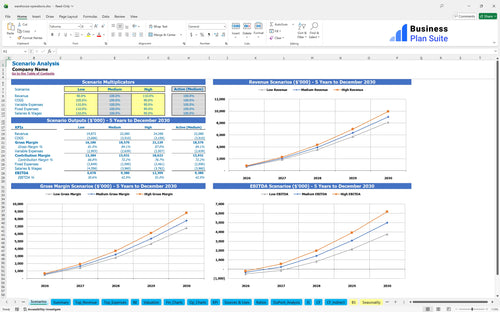
Three scenario analysis
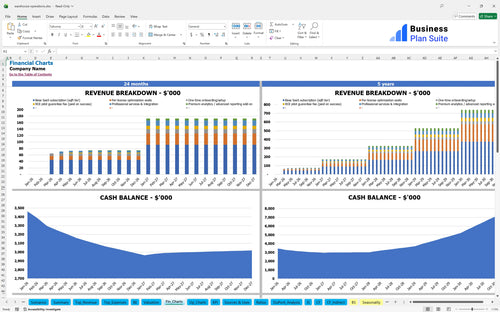
Presentation ready
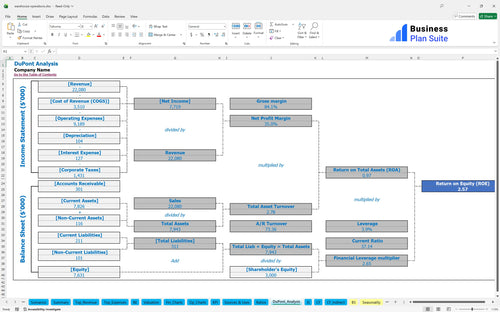
DuPont analysis
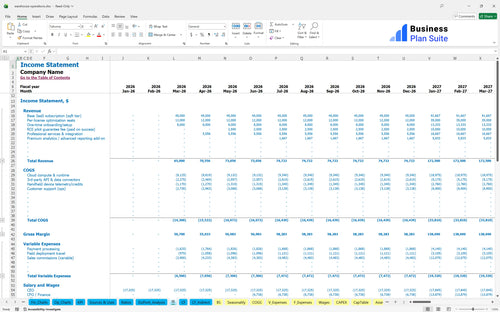
Researched revenue assumptions
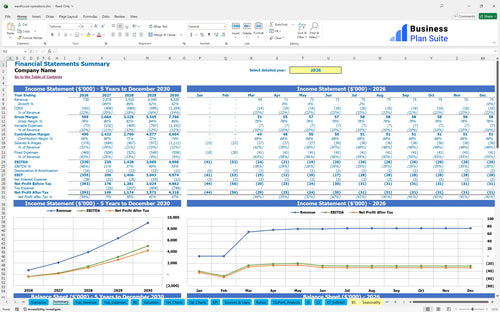
Lender-friendly financial outputs
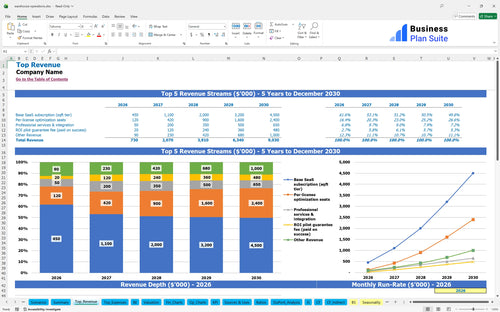
Revenue stream detailed view
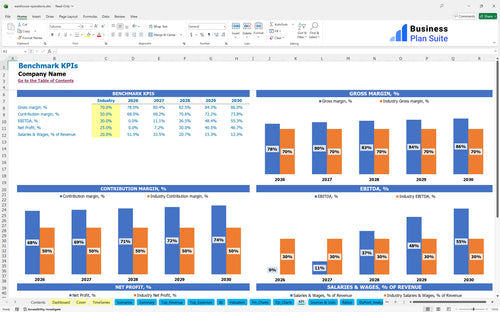
Performance metrics benchmark
We built this financial model based on a detailed analysis of a warehouse operations business. The key assumptions-like monthly revenue streams from storage ($120,000) and handling ($80,000), operating expenses, staffing, and initial capital investments-are pre-populated with realistic industry data. Everything is defintely laid out and fully editable, so you can quickly tailor it to your own rapid deployment warehouse solution business plan.
This business is projected to be profitable in its first year. Based on monthly revenues of $250,000 and a net profit margin of 12%, you can expect to generate around $30,000 in net profit per month after all costs are covered. This provides a strong foundation for growth and reinvestment.
To launch this distribution center, you'll need an initial investment of approximately $550,000. This covers all the critical one-time capital expenditures required to get your facility up and running efficiently from day one, which is essential for any business plan for warehouse optimization software and hardware.
Investors can anticipate a strong return profile. The financial projections show an Internal Rate of Return (IRR) of 25%, a 3.5x Return on Investment (ROI), and a payback period of approximately 4 years. These are compelling metrics when presenting your logistics business plan template to potential backers.
This pre-written warehouse operations business plan comes with a fully functional financial model, saving you weeks of work. It's built with industry-specific formulas for a logistics startup plan, but every assumption is clearly laid out and simple to edit. You can easily adapt it to your specific distribution center business plan, whether you're focused on e-commerce fulfillment or B2B logistics.
You need a clear view of the future, and this operational efficiency template provides just that. It generates detailed five-year forecasts for your revenue, costs, and profits. This helps you create a robust supply chain management plan and secure funding by showing investors a clear path to long-term profitability and growth.
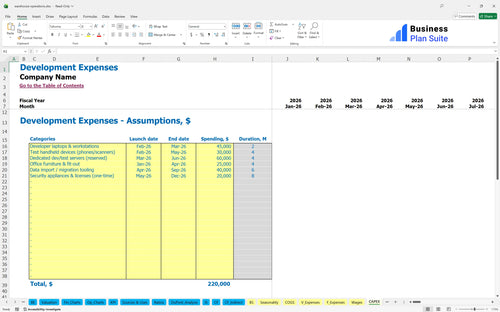
Understanding your numbers is critical for any warehouse management business plan. This model breaks down all your potential startup and operating costs, from one-time capital expenditures to recurring monthly overhead. This detailed view ensures you don't miss anything when planning your budget and inventory control business plan.
When does your warehouse start making money? This model calculates your break-even point in both sales volume and time. By analyzing your fixed and variable costs against your pricing, you can pinpoint the exact moment your operations become profitable, a key metric for any operations management business plan.
How do your projections stack up against the competition? We've integrated key industry benchmarks for warehouse operations to help you set realistic goals. You can compare your gross margins, labor costs, and other key performance indicators (KPIs) to industry averages to validate your warehouse optimization strategy.
Whether you work on a Mac or PC, our template is designed for you. It's fully compatible with Microsoft Excel and Google Sheets, giving you the flexibility to work in your preferred environment. This also makes it easy to collaborate with your team or advisors on your business plan for a 3PL logistics provider.

Present your financial projections for a warehouse operations startup with confidence. The model includes an easy-to-read dashboard with charts and graphs that visualize your key financial data. These visuals make it simple to track performance and communicate your story to investors, lenders, and partners.
Warehouse demand can fluctuate, especially in e-commerce. This model allows you to adjust for seasonality, so you can plan for peaks and troughs in demand. You can also run different scenarios to see how changes in pricing or costs impact your bottom line, helping you build a resilient warehouse labor efficiency improvement business plan.
This Word format warehouse business plan template is designed to help you get funded. The reports are professionally formatted and provide the detailed financial data that investors and banks need to see. It gives you a credible and compelling way to present your vision for a mid-sized distribution center startup.


Simply purchase and download the financial model template, then access it instantly using Microsoft Excel or Google Sheets. No installation or technical expertise required-just open and start working.

Enter your business-specific numbers, including revenue projections, costs, and investment details. The pre-built formulas will automatically calculate financial insights, saving you time and effort.

Leverage the investor-ready format to confidently showcase your financial projections to banks, franchise representatives, or investors. Impress stakeholders with clear, data-driven insights and professional reports.

Leverage the investor-ready format to confidently present your projections to banks, franchise representatives, or investors.
Deployment typically completes within the promised 10-day window, resolving time-to-market concerns and investor credibility issues by delivering rapid, demonstrable results the template's "Non-disruptive, rapid deployment SaaS layer" benefit/feature and pre-written content help you document timelines and pilot plans for lenders and stakeholders while saving preparatory work.