

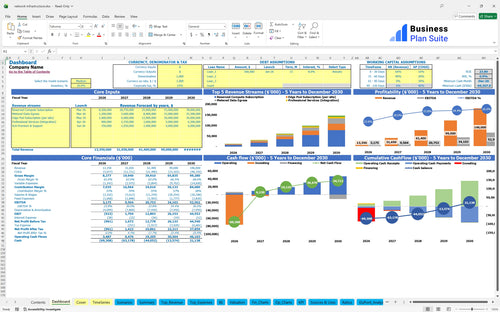
All-in-one Dashboard
Core inputs and core outputs


The market is unpredictable, so your financial model shouldn't be rigid. You can easily adjust key assumptions-like customer growth, pricing, or operational costs-to see how they impact your bottom line. This helps you prepare for different market conditions and make smarter strategic decisions for your industrial IoT infrastructure.
Core inputs and core outputs
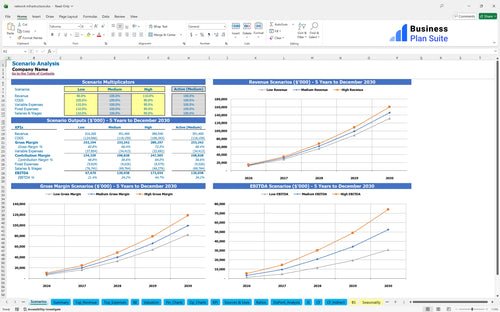
Three scenario analysis
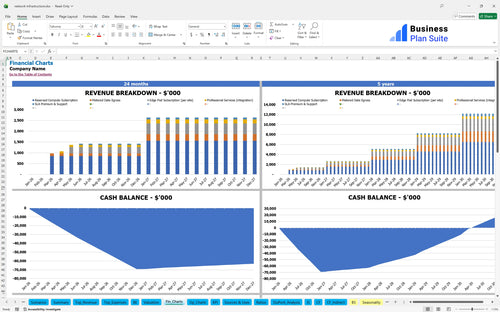
Presentation ready
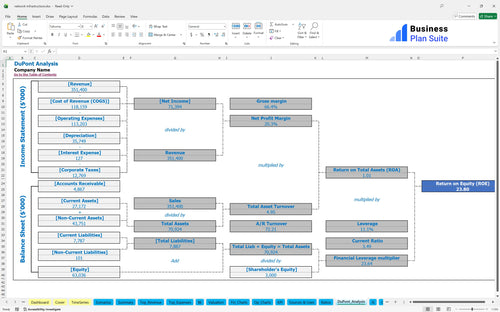
DuPont analysis
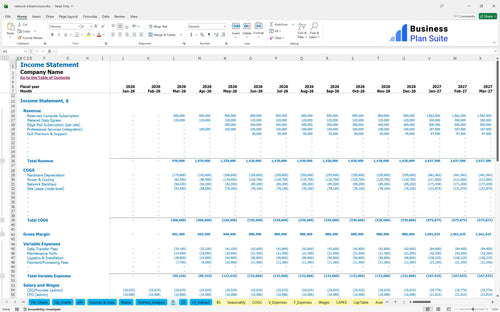
Researched revenue assumptions
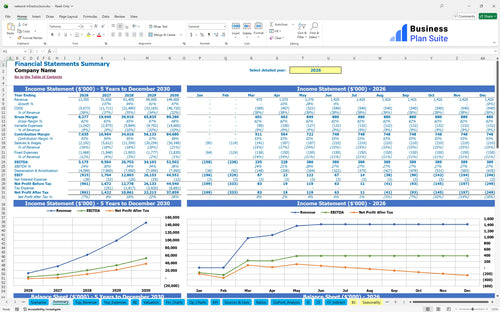
Lender-friendly financial outputs
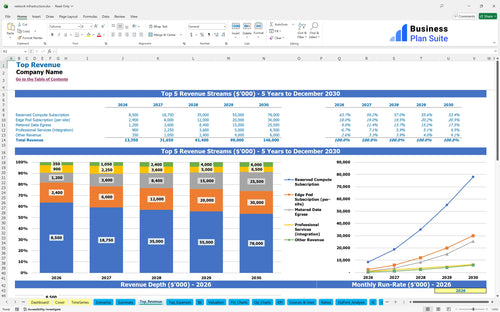
Revenue stream detailed view
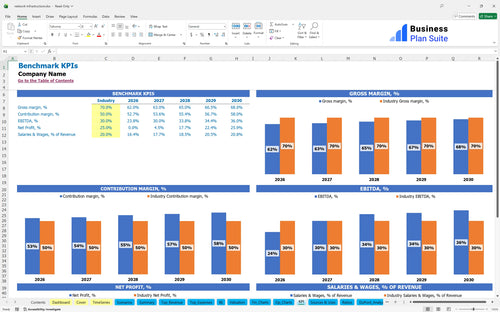
Performance metrics benchmark
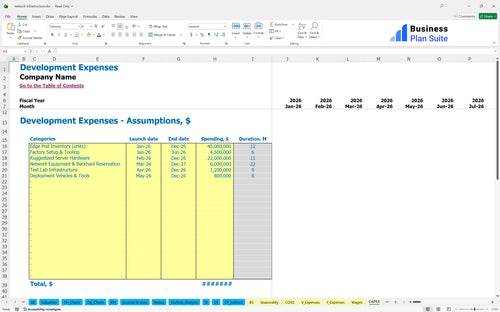
We built this network infrastructure financial model based on extensive research into the edge computing market. Key assumptions for your business plan for a managed edge services company-including revenue streams from edge pods and connectivity, operating expenses, and a detailed staffing plan-are pre-populated with realistic industry data. For example, we've budgeted an initial CAPEX of $2.3 million for hardware and facility build-out, but every single assumption is fully editable to fit your unique vision.
You're on track to become profitable in Year 2. After accounting for initial deployment costs and operational expenses, the model shows a net loss of $560,000 in the first year. However, with growing recurring revenue from managed services, you turn a net profit of $245,000 in the second year.
You'll need approximately $2.3 million in initial capital to launch. This covers all the major one-time costs to get your edge computing infrastructure as a service business model off the ground and operational before you start generating significant revenue.
Investors can expect a strong return on their investment. The financial projections show an Internal Rate of Return (IRR) of 28% and a Return on Investment (ROI) of 2.5x over the five-year period. The initial investment is projected to be paid back within 3.8 years.
This pre-written network infrastructure business plan comes with a fully functional financial model. It's pre-filled with industry-specific formulas and assumptions for revenue streams like managed edge services and low latency computing solutions, but it is also fully editable to match your specific edge computing business plan.
You need a clear view of the future. This template provides detailed five-year financial projections for your edge data center, including revenue, costs, and profit forecasts. This is essental for digital infrastructure planning and securing investor confidence in your enterprise network strategy.
Understanding your initial cash burn is critical. The model gives you a detailed breakdown of all the costs required to launch and operate your micro data center business. It covers everything from hardware procurement to facility build-out, helping you create a realistic budget from day one.
You need to know your tipping point. The model automatically calculates your break-even point in both sales volume and time, showing you exactly when your infrastructure as a service business plan will start generating a profit. This helps you set realistic targets and manage cash flow effectively.
How do you stack up against the competition? We've integrated key performance indicators (KPIs) and benchmarks from the edge data center market analysis. This lets you compare your financial projections for an edge data center business against established industry standards for a reality check.
Work where you're most comfortable. This network infrastructure business plan template is fully compatible with both Microsoft Excel and Google Sheets. This flexibility allows for easy collaboration with your team, advisors, and potential investors, no matter their preferred platform.
A picture is worth a thousand numbers. The model includes an intuitive dashboard with charts and graphs that visualize your key financial data. This makes it easy to track performance, spot trends, and present your go-to-market strategy for enterprise edge solutions in a clear, compelling way.
The market is unpredictable, so your financial model shouldn't be rigid. You can easily adjust key assumptions-like customer growth, pricing, or operational costs-to see how they impact your bottom line. This helps you prepare for different market conditions and make smarter strategic decisions for your industrial IoT infrastructure.
When you're pitching for capital, you need to look professional. This template for a network infrastructure startup is formatted into a clean, investor-ready report. It clearly outlines your business model, financial projections, and key assumptions, helping you build credibility and secure funding.


Simply purchase and download the financial model template, then access it instantly using Microsoft Excel or Google Sheets. No installation or technical expertise required-just open and start working.

Enter your business-specific numbers, including revenue projections, costs, and investment details. The pre-built formulas will automatically calculate financial insights, saving you time and effort.

Leverage the investor-ready format to confidently showcase your financial projections to banks, franchise representatives, or investors. Impress stakeholders with clear, data-driven insights and professional reports.

Leverage the investor-ready format to confidently present your projections to banks, franchise representatives, or investors.
Typical deployment timelines are much faster than building from scratch and help reduce market research overwhelm the template's "Rapid deployment cycles" and "Pre-Written Content" let you explain launch timing clearly and compare weeks versus 18 months, speeding investor conversations and avoiding expensive consultant delays.