

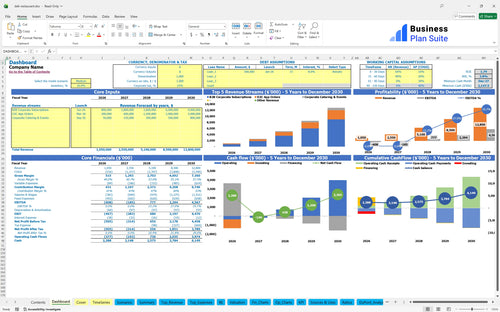
All-in-one Dashboard
Core inputs and core outputs


Deli sales can fluctuate throughout the year. This model allows you to simulate seasonal revenue changes and adjust your financial plans accordingly. You can test different scenarios to see how holidays or slow months might impact your cash flow, a crucial step for a business plan for a B2B lunch subscription service.
Core inputs and core outputs
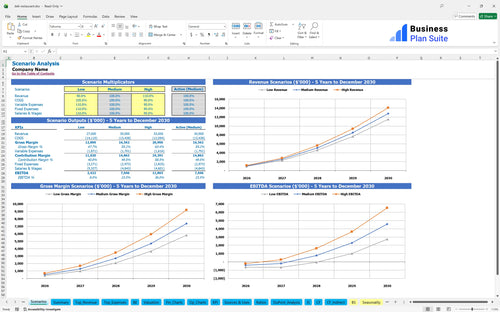
Three scenario analysis
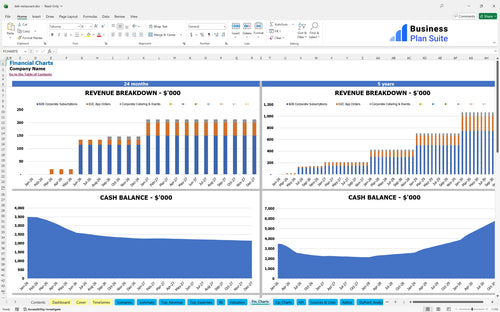
Presentation ready
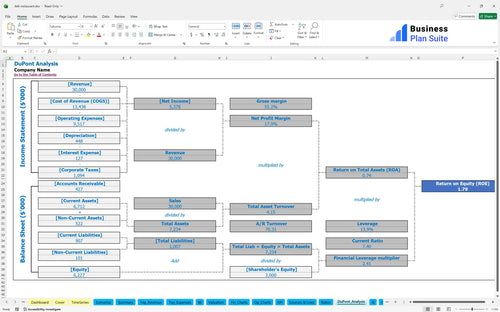
DuPont analysis
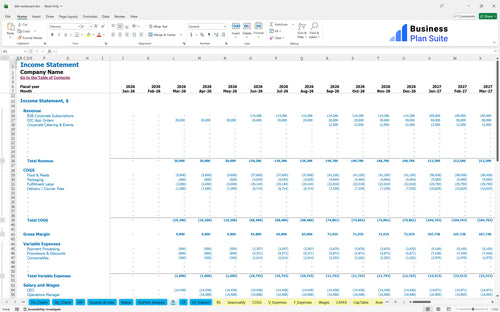
Researched revenue assumptions
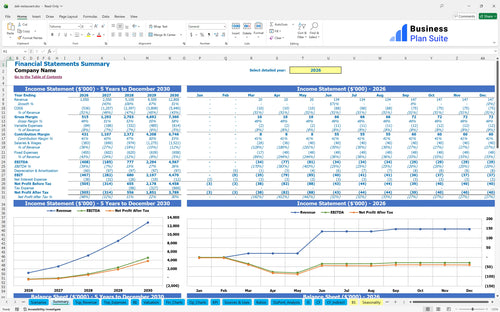
Lender-friendly financial outputs
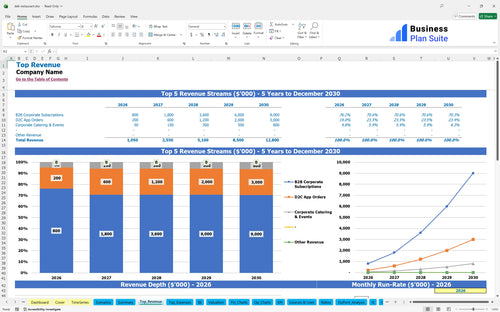
Revenue stream detailed view
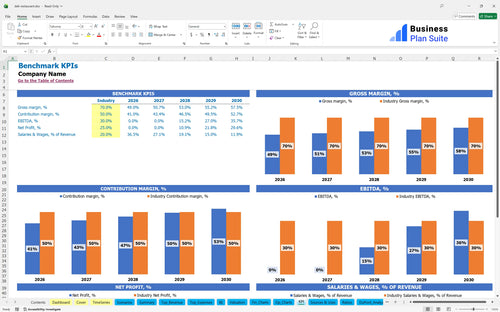
Performance metrics benchmark
We built this deli business plan template using our own operational research. The model comes pre-populated with assumptions for a deli targeting urban corporate clients, starting with 80 orders per day at an average order value of $18. Key inputs for revenue streams, operating expenses, staffing, and initial capital investments are already filled in but are fully editable to match your specific vision, whether it's a pre-written business plan for a rapid delivery deli or a food service business plan focusing on 10-minute fulfillment.
Based on the initial projections, the business becomes profitable in Year 2. Here's the quick math: with revenue growing from $432,000 in the first year to $648,000 in the second, the operation scales past its fixed costs and generates a net profit of $51,139 in Year 2, a critical milestone for any new venture.
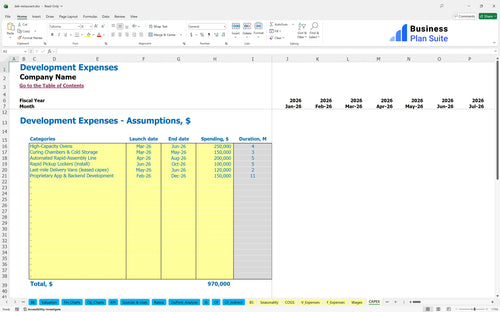
You'll need $125,000 in initial capital to launch this deli concept. This figure covers all the one-time startup costs required to get the doors open, from building out the kitchen to initial marketing and securing permits. This is your total cash requirement before you make your first sale.
Investors can expect strong returns based on this model's five-year forecast. The projected Internal Rate of Return (IRR), which measures the profitability of the investment, is 45%. The total Return on Investment (ROI) is 3.2x, and the initial capital is paid back in just 2.8 years.
This deli business plan template is a ready-to-use financial model pre-filled with industry-specific formulas. It gives you a complete financial picture, making it easy to tailor the numbers to your specific sandwich shop business plan or fast casual business plan, whether you're starting a commissary kitchen or a corporate lunch program.
You need a clear roadmap for the next five years. This model provides detailed revenue, cost, and profit projections specifically for a quick service restaurant business plan. It helps you forecast your financials accurately, which is essential for securing loans or investment for your food service business plan.
Launching a deli involves significant upfront and ongoing expenses. This template gives you a detailed breakdown of all potential costs, from kitchen equipment to monthly rent and payroll. Knowing these numbers inside and out is critical when writing a business plan for a corporate deli or a meal prep business plan.
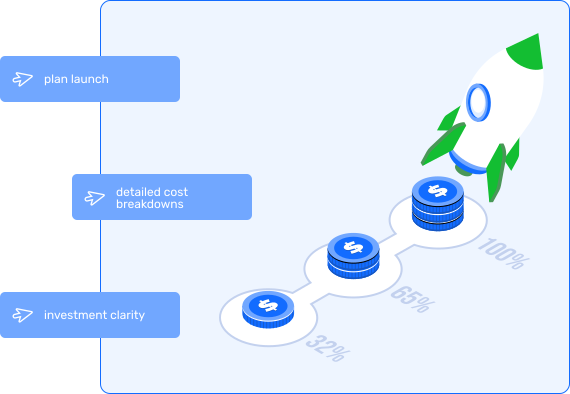
How many sandwiches do you need to sell to cover your costs? This model calculates your break-even point in both units and dollars. This analysis helps you set realistic sales targets and understand exactly when your deli will start making money, a key component of any deli restaurant business plan template with financial projections.
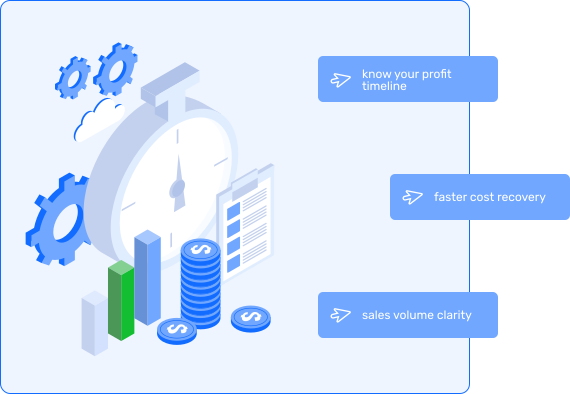
Are your food and labor costs in line with other delis? The model incorporates key industry benchmarks, allowing you to compare your performance against established standards. This is an essentail feature for a downloadable business plan for a high-tech deli, ensuring your assumptions are grounded in reality.
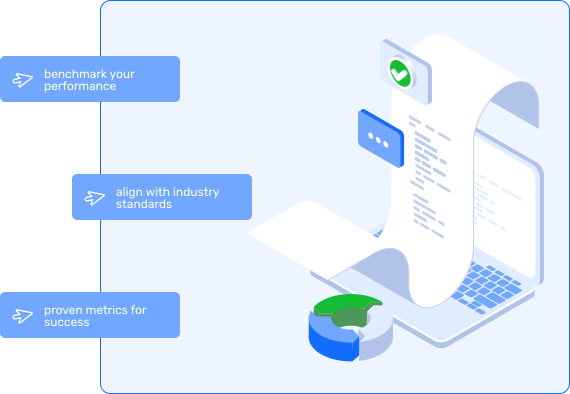
This pre-written business plan template is built for flexibility. It's fully compatible with Microsoft Excel for both Windows and Mac, and you can also use it in Google Sheets for easy collaboration with your team or advisors. Access your financials from anywhere, on any device.
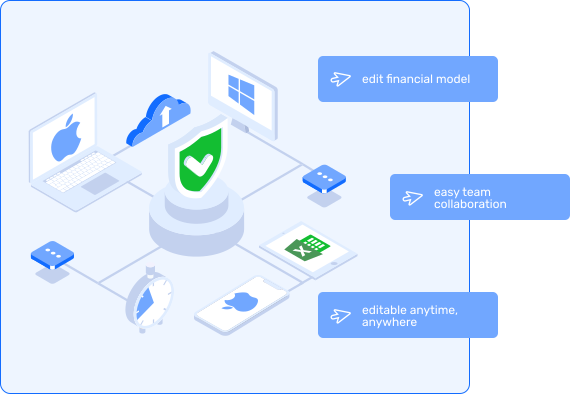
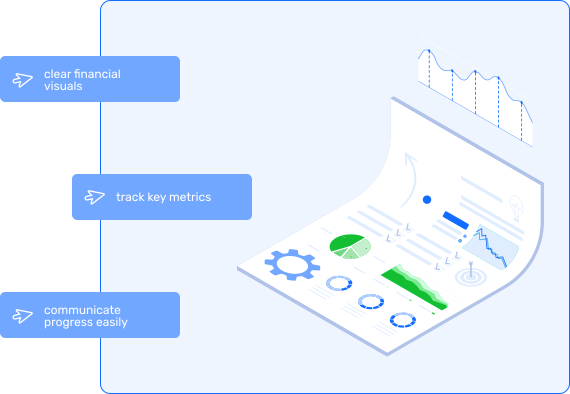
Numbers are easier to understand when you can see them. The model includes a dashboard with charts and graphs that visually represent your revenue, expenses, and profitability. This makes it simple to track your progress and present your financial story to investors, partners, or lenders.
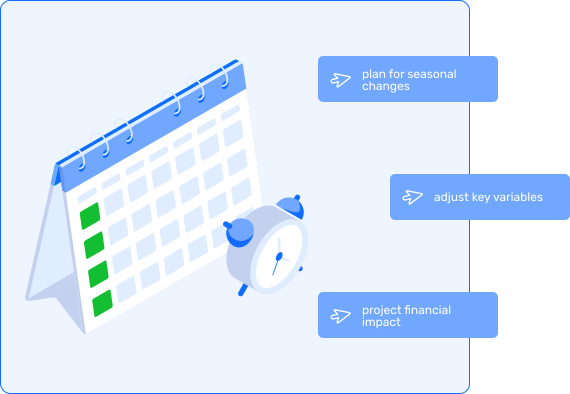
Deli sales can fluctuate throughout the year. This model allows you to simulate seasonal revenue changes and adjust your financial plans accordingly. You can test different scenarios to see how holidays or slow months might impact your cash flow, a crucial step for a business plan for a B2B lunch subscription service.
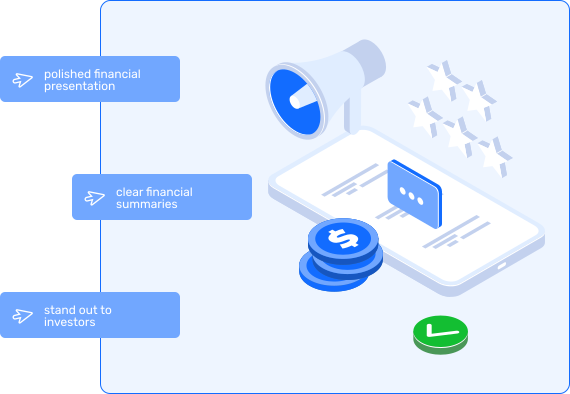
When you're asking for money, you need to look professional and prepared. This sample business plan for a vertically integrated deli is formatted to be clear, concise, and credible. It provides the detailed financial projections and summaries that investors and banks need to see before they'll write a check.

Simply purchase and download the financial model template, then access it instantly using Microsoft Excel or Google Sheets. No installation or technical expertise required-just open and start working.

Enter your business-specific numbers, including revenue projections, costs, and investment details. The pre-built formulas will automatically calculate financial insights, saving you time and effort.

Leverage the investor-ready format to confidently showcase your financial projections to banks, franchise representatives, or investors. Impress stakeholders with clear, data-driven insights and professional reports.

Leverage the investor-ready format to confidently present your projections to banks, franchise representatives, or investors.
You can start customizing immediately and have a lender-ready draft quickly the template provides Pre-Written Content and editable Word tables so you avoid time-consuming from-scratch writing and can focus on investor standards instead of recreating sections, using included financial tables like Profit & Loss and Cash Flow to populate forecasts.