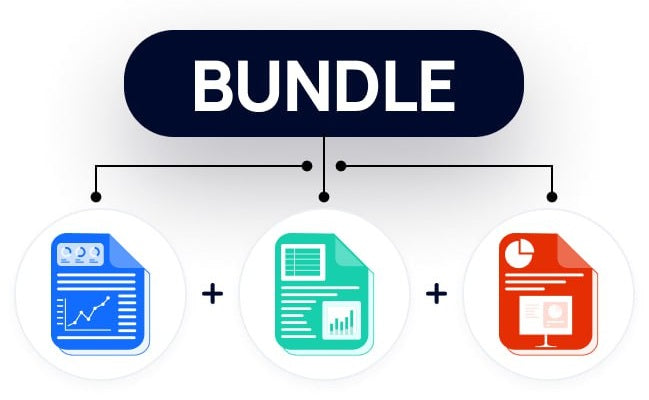
You're starting a tanning salon with no experience-validate demand by interviewing affluent metro users and secure a pilot placement with a premium medspa before spending. Build a micro-misting pilot, cloud AI color-match using 3D scans and 12 skin metrics, aim for 90-second sessions and subscription tiers of $99-$199.
#
Step Name
Description
1
Step 1 - Validate Demand and Customer Willingness to Pay
Interview affluent customers, run ads, and measure conversion and willingness to pay.
2
Step 2 - Build Prototype Chamber and Test Formulation
Build pilot chambers, validate DHA formula, track consumables, and eliminate streaking.
3
Step 3 - Develop AI Color-Match and Scanning Pipeline
Integrate 3D scanners and AI, train on diverse tones, validate outputs, ensure privacy.
4
Step 4 - Secure Strategic Partnership Placements
Place kiosks in premium partners, negotiate fees, and collect operational feedback.
5
Step 5 - Launch Memberships and Product E-commerce
Launch tiered subscriptions and skincare e-commerce, track ARPU, churn, and fulfillment.
6
Step 6 - Scale Operations and Support Infrastructure
Scale engineers and support, implement maintenance contracts, replicate fitouts, and secure runway.
7
Step 7 - Optimize Unit Economics and Expand Licensing
Reduce COGS and partner shares, add licensing fees, and optimize margins with forecasts.
Key Takeaways
Validate affluent metro demand with 20 paid interviews.
Pilot one micro-mist chamber in lab before manufacturing.
Build AI color-match using 3D scans and 12 metrics.
Secure premium wellness partner for pilot placement and revenue.
How Do You Start Tanning Salon If You'Ve Never Done This Before?
You're hiring your first market tests: start by interviewing affluent metropolitan users to validate demand and willingness to subscribe, then build a single pilot micro-mist tanning booth under lab conditions and run a salon pilot. Next develop the AI color-match using 3D body scans and the stated 12 skin metrics, and secure initial placements with premium wellness studios for pilot runs. Price membership tiers at $99, $149, and $199 to match projected value and test conversion. Quick step: prove one partner location converts from trial to subscription.
First steps to launch
Interview affluent metro users for validation
Prototype one micro-mist tanning booth in lab
Build AI color-match with 3D scans, 12 skin metrics
What Should You Do First Before Spending Any Money?
You're not ready to buy chambers-start by validating demand and willingness to pay so you don't build the wrong automated tanning salon. Run customer interviews with affluent metro users, launch a minimal landing page and waitlist, and build a low-cost prototype for AI color match tanning and DHA chemistry validation; then secure one medspa tanning partnership pilot and map a realistic CAPEX plan. Read How Profitable is a Tanning Salon? for model context and revenue tier guidance.
First Spend Checklist
Run targeted interviews to confirm subscription demand
Publish a waitlist landing page to test conversion
Build a low-cost micro-mist tanning booth prototype for AI and DHA tests
Negotiate one medspa pilot and map pilot-batch CAPEX
How Long Does It Usually Take To Get Open?
You can plan a staged open: prototype, labs, cloud, then partner rollouts - read the cost plan here How Much Does It Cost to Start a Tanning Salon?. Prototype and lab setup align with the cloud build and lab equipment timelines. Initial chamber pilot production runs February to June 2026, cloud and AI platform completes by September 2026, and robotics R&D continues through 2027. Partner kiosk rollouts begin June 2026 and extend through 2030 for scale.
Key timeline checkpoints
Prototype & lab setup align with cloud build
Pilot micro-mist tanning booth: Feb-Jun 2026
Cloud + AI color-match done by Sep 2026
Robotic tanning chamber R&D: 2026-2027; kiosk rollout Jun 2026-2030
How Do You Create Strong Tanning Salon Business Plan?
Create a business plan that centers on a tanning salon subscription model and ties pricing, timing, and capex to measurable milestones - keep reading to see the exact levers to build unit economics. Base revenue on three membership tiers at $99-$199 monthly, add a product e-commerce launch in September 2026, and use the provided COGS percentages for DHA, packaging, and consumables. Model variable partner revenue share and performance marketing by year, and phase capex for pilot chambers and kiosk fitouts precisely to avoid cash shortfalls; see 5 KPI & Metrics for a Tanning Salon: What Should You Track for Success?
Business plan checklist
Price tiers: $99, $149, $199 monthly
Schedule e-commerce launch: September 2026
Use provided COGS for DHA, packaging, consumables
Phase pilot chamber and kiosk capex precisely
What Mistake Delays Most First-Time Owners?
You're delayed when you underprice complexity - these specific failures stop an automated tanning salon before it scales, so read the quick list and fix them now. The biggest culprits: underestimating robotics and AI integration time for the robotic tanning chamber and AI color match tanning, skipping medspa tanning partnership negotiations, ignoring tanning consumables and DHA spray formulation supply chains, and overcomplicating tanning membership tiers which hurts conversion. If you need the financial plan, see How to Write a Business Plan for a Tanning Salon? for model details and capex phasing. Here's the quick math: delays in robotics/AI push pilot rollouts and raise R&D spend during the pilot batch production tanning chambers phase.
Top delays to fix
Underestimate robotics/AI integration time - causes cost overruns
Step 1 - Validate Demand And Customer Willingness To Pay
Goal: Confirm affluent metro customers will join a tanning salon subscription and pay the planned tiers so 'done' is a pilot waitlist plus measured trial-to-subscription conversion.
What to Do
Interview 25 affluent metro customers who spend on beauty services
Run paid ads to drive a waitlist landing page and measure CTR
Offer 20 partner studio pilot sessions and record trial uptake
Survey pilots for preferred frequency and willingness to pay across $99, $149, $199
Track trial-to-subscription conversion and first-30-day churn
What You Should Have
Waitlist signups with source and CTR data
Pilot session feedback log and conversion spreadsheet
Priced membership preference sheet (tiers tested)
What It Depends On
Partner studio availability for pilot sessions
Ad spend and creative speed to generate waitlist traffic
Access to target customer pool in affluent metro areas
Common Pitfall
Surveying a non-target audience --> wrong price signals and wasted marketing
Skipping partner pilots --> low real-world conversion data and rework later
Quick Win
Create a one-page waitlist landing page to capture emails and test demand / speeds hiring decisions and early CAC estimates
Step 2 - Build Prototype Chamber And Test Formulation
Goal: Build a pilot run of the robotic tanning chamber and validate the DHA spray formulation in lab conditions so 'done' means a repeatable, streak-free micro-mist tanning booth session with measured consumable usage.
What to Do
Order pilot batch of chambers for controlled field tests
Run lab validation of DHA spray formulation for color accuracy
Instrument chamber to log spray volume, nozzle pressure, and dry time
Test sessions under real use to measure streaking and retention
Adjust nozzle patterns and formula ratios; retest until consistent
What You Should Have
Pilot batch units and test logbook with session data
Validated DHA formulation report with retention and dry-time metrics
Consumable usage sheet to feed COGS inputs
What It Depends On
Vendor lead time for pilot chambers and nozzle assemblies
Lab access and equipment procurement as budgeted in capex
Availability of test participants from partner pilot sites
Common Pitfall
Skipping instrumented trials --> undetected variability and rework
Not tracking consumable usage precisely --> mispriced COGS and stockouts
Quick Win
Create a one-page test protocol to prevent inconsistent trials / speeds up repeatable results
Run five scripted sessions and produce a short report showing dry time and streak metrics to prove concept
Step 3 - Develop Ai Color-Match And Scanning Pipeline
Goal: Build an AI-driven 3D body scan tanning and color-match pipeline so the robotic tanning chamber delivers consistent, repeatable results and 'done' is meeting pilot accuracy in live sessions.
What to Do
Integrate 3D scanner hardware with kiosk control software
Annotate training set using 12 skin metrics and diverse tones
Train inference model and deploy for real-time matching in cloud
Test AI outputs in pilot micro-mist tanning booth sessions
Apply data-privacy controls and consent flows for biometric scans
What You Should Have
Validated model checkpoint with accuracy and bias report
Cloud inference pipeline ready for real-time calls
Signed pilot data-consent and privacy checklist
What It Depends On
Availability and cost of 3D body scanners (pilot budget lists $900,000)
Completion of cloud and AI platform build by September 2026
Pilot access to partner sites for live data and user feedback
Common Pitfall
Training on non-representative skin tones --> biased color matches and poor retention
Skipping privacy compliance --> partner pullout and legal rework
Quick Win
Run three paid pilot sessions with partner studio to capture labeled scans and saves model tuning time
Create a one-page consent form for biometric scans to speed partner approvals
Step 4 - Secure Strategic Partnership Placements
Get premium medspa and fitness studio pilots in place so the automated tanning salon is proven in-market and 'done' means repeat subscriptions at partner sites and a signed placement/licensing term sheet.
What to Do
Call target medspas and fitness studios in affluent metro areas
Draft a one-page pilot offer with subscription revenue share terms
Test a single micro-mist tanning booth at one partner location
Negotiate placement or licensing fees to start in 2027
Collect operational feedback to refine kiosk tanning rollout specs
What You Should Have
Signed pilot agreement with at least one premium partner
Placement/licensing term sheet showing partner revenue share
Partner site pilot report with trial-to-subscription conversion
What It Depends On
Partner negotiation speed and willingness to pilot
Site readiness and kiosk tanning fitout lead time (rollouts begin June 2026)
Data privacy and compliance for 3D body scan tanning and AI color-match
Underpreparing kiosk specs for site operations --> rework and delayed kiosk tanning rollout
Quick Win
Create a one-page pilot offer to speed partner signups
Run a single paid partner trial to produce conversion metrics for pitch decks
Step 5 - Launch Memberships And Product E-Commerce
Goal: Open subscription sales for the automated tanning salon and launch skincare e-commerce so 'done' means active signups at $99, $149, and $199 tiers and a live product store scheduled for September 2026.
What to Do
Price membership tiers at $99, $149, $199
Build checkout and subscription billing flows for monthly plans
Integrate automated re-booking tied to fade cycles and session frequency
Launch e-commerce catalog with DHA spray formulation SKUs by Sep-2026
Subscriptions cost $99, $149, or $199 per month depending on tier The model is built around 2 to 4 precision sessions per month and supports automated re-booking to maintain retention Forecasted first-year revenue supports these tiers with $4,400,000 in year one and $9,900,000 in year two
Each session is designed to take under 90 seconds for the micro-misting application Rapid-dry chemistry and robotic nozzle precision aim for zero streaking during that short service window Operational benchmarks rely on quick turnover to support high-frequency subscriptions and forecasted membership volumes
Yes partnering accelerates customer access and credibility with the target profile The go-to-market strategy emphasizes placement with premium wellness partners and introduces placement licensing revenue beginning in 2027 Early pilots at partner sites reduce CAC and validate subscription conversion before full retail rollout
Major capex includes pilot chamber production at $1,500,000 and robotics R&D at $2,000,000 Additional planned spend covers 3D body scanners estimated at $900,000 and retail kiosk fitouts totaling $3,500,000 through 2030 Include cloud platform build and lab setup costs as well for complete readiness
The provided model indicates breakeven revenue level is reached in year 1 Financial outputs show EBITDA of $561,000 in year one and increasing to $2,704,000 in year two Monitor minimum cash which shows a nadir in Dec-26 to manage runway closely